
Happy Kombucha fizz guide
How to Get Fizz in Your Home Brews
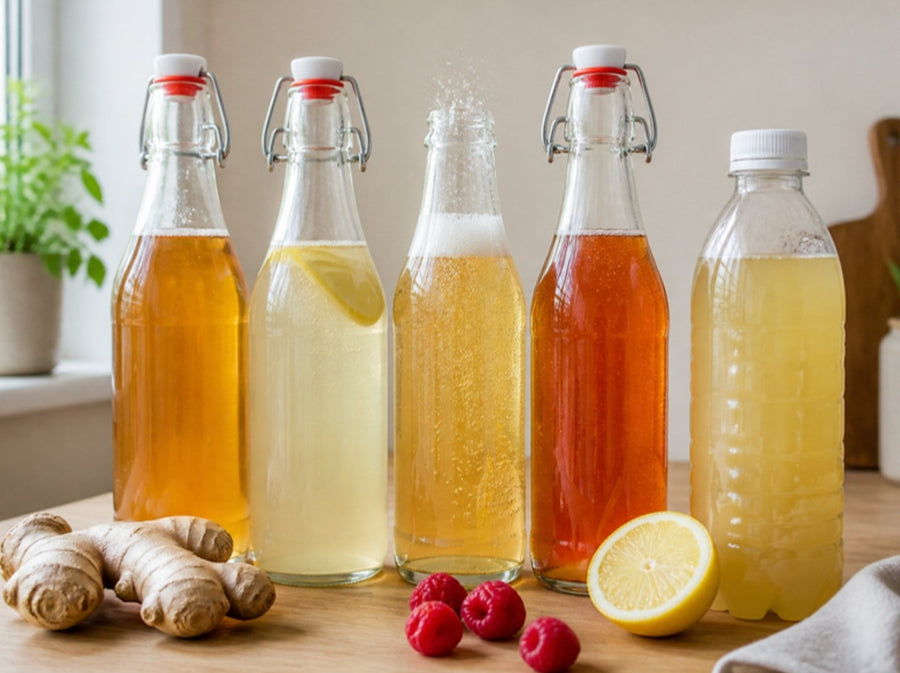
Fizz is one of the best bits of home brewing, and it's made in the bottle, not the jar. Whether you brew kombucha, water kefir, ginger beer or a turmeric bug, the same few rules decide how bubbly your drink turns out. Get them right and you'll have lovely, lively drinks. Get them wrong and you'll have flat drinks, or bottles that gush everywhere.
At a glance
Seal it
Fizz only builds in an airtight bottle. Use swing-top fermenting bottles or PET plastic bottles.
Feed it
Add a little sugar to the bottle: a splash of juice, some fruit or a pinch of sugar.
Fill it
Fill to 1 to 2cm from the top. Less air means more bubbles in the drink.
Warm it, then chill it
Leave it somewhere warm for a few days, burping daily, then chill it to stop the fizz building.
How fizz works
The yeasts in your culture eat sugar and make carbon dioxide. In an open jar, that gas just floats away, which is why your first brew is never very fizzy. Once you seal the drink in a bottle (the second ferment), the gas has nowhere to go, so it dissolves into the drink. When you open it, you get bubbles.
So you need three things: live yeasts, a little sugar for them to eat, and a sealed bottle to trap the gas. Warmth speeds it all up, and cold slows it down.
New culture? The first few brews from a new culture are often flat while it settles in. That's normal. Give it a few batches before you start changing things.
Getting fizz, step by step
-
Use the right bottles
Use proper fermenting bottles, such as our swing-top fermenting bottles, or PET plastic bottles. Ordinary glass bottles, jars and decorative bottles aren't made for pressure and can burst. Check the seals on swing-tops every few months.
-
Add a little sugar
A splash of fruit juice (about a tenth of the bottle), a few pieces of fresh, frozen or dried fruit, some grated ginger, or up to ¼ teaspoon of plain sugar per bottle. A little goes a long way. Too much is how bottles get over-pressured.
-
Fill almost to the top
Leave just 1 to 2cm of space. The less air in the bottle, the more gas dissolves into the drink.
-
Leave it somewhere warm
Around 20 to 26°C, out of direct sunlight, usually for 1 to 3 days (longer for ginger beer, see below). Below about 18°C it will be slow.
-
Burp it every day
Open the lid slowly until it hisses, then close it again. In warm weather, or with lots of fruit, do it more often. With PET bottles, give them a squeeze: when they're firm, they're fizzy.
-
Chill it
Once it's as fizzy as you like, move the bottles to the fridge. The cold slows the yeasts right down, and chilled drinks hold their bubbles better and are far less likely to gush when opened.
For cleaning, checking and burping your bottles safely, see our bottling safely guide.
Why isn't it fizzy?
| What's happening | What to try |
|---|---|
| It's a new culture | Be patient. The first few brews are often flat while the culture settles in. |
| The bottle isn't sealing | Check the swing-top seal and replace it if it's perished. Make sure screw caps are tight. A tiny leak lets all the gas out. |
| Too much air in the bottle | Fill to 1 to 2cm from the top. |
| Not enough sugar left | Add a splash of juice, some fruit or a pinch of sugar to the bottle. If the first brew went on too long and tastes very sour, there's little sugar left for fizz, so bottle a little sooner. |
| It's too cold | Move the bottles somewhere warmer, around 20 to 26°C, and give them longer. |
| It wasn't left long enough | Give it another day or two before chilling. |
| It was opened warm | Warm drinks lose their fizz quickly when opened. Chill well first. |
| You've been burping too much | Burp just enough to release the pressure, then close it straight away. |
Too fizzy, or gushing?
Lots of fruit, extra sugar and warm weather can make a drink very lively. If it foams out when you open it:
- Chill the bottles for at least a few hours, ideally overnight, before opening.
- Open slowly over the sink, easing the lid a little at a time, and stop if it starts to foam up.
- Next time, use less fruit or juice, give it a shorter time at room temperature, and burp more often.
- If a bottle feels rock hard, or the lid is straining, put it in the fridge and release the pressure very slowly. See bottling safely.
Tips for your culture
Kombucha and jun
- Bottle while it still tastes a little sweet. If it's very vinegary, there's little sugar left to make bubbles.
- Leave the bottles at room temperature for 2 to 3 days, then chill.
- Ginger, berries and fruit juice all give great fizz. Ginger is especially lively.
- Small floating bits and a new baby SCOBY in the bottle are normal. Strain them out with a plastic sieve if you like.
- See our kombucha brewing guide and heirloom kombucha guide.
Water kefir
- The first brew isn't meant to be fizzy. Always brew it open, under a cloth, and save the fizz for the bottle.
- Add a little fruit juice or fruit to the bottle and leave it for 1 to 3 days.
- Water kefir makes a lot of gas. Burp it every day, and more often above 24°C.
- White or organic cane sugar in the first brew gives the best fizz. Darker sugars can make it harder.
- See our water kefir guide.
Ginger beer and turmeric bug
- A bug makes a sweet brew, so it needs longer in the bottle: from about 3 days to several weeks, depending on how warm it is.
- It builds up a lot of pressure. Only use PET bottles or proper fermenting bottles, and release the gas every day.
- Turmeric soda gets especially fizzy and can break even pressure-tested glass, so we recommend BPA-free plastic PET bottles for it.
- PET bottles are ideal, as you can squeeze them to feel the fizz building.
- Taste it regularly. When it's no longer very sweet and is nicely fizzy, chill it.
- See our ginger bug guide and turmeric bug guide.
Milk kefir
- Milk kefir is only lightly sparkling, but a second ferment adds a gentle fizz and a milder taste.
- Seal the strained kefir in a bottle, with fruit if you like, and leave it at room temperature for up to a day, then chill.
- See our milk kefir guide.
Frequently asked questions
Why is my first brew flat?
Because it's brewed open, so the gas escapes. The fizz comes in the second ferment, once the drink is sealed in a bottle.
Can I add sugar straight to the bottle?
Yes, but only a little: up to ¼ teaspoon of plain sugar per bottle. Fruit or a splash of juice works just as well and adds flavour.
Which bottles are best?
Swing-top fermenting bottles and PET plastic bottles. Swing-tops look lovely and seal well. PET bottles are cheap, light and let you feel the pressure by squeezing them.
How do I know when it's fizzy enough?
Squeeze a PET bottle: when it's firm, it's fizzy. With glass, burp a bottle and listen for a good hiss, or chill one and taste it.
Can bottles explode?
Yes, if they aren't made for pressure, or are left too long with too much sugar in a warm room. Use proper bottles, burp them daily, chill them once they're fizzy, and see our bottling safely guide.
Why does it gush when I open it?
Too much pressure, or it was opened warm. Chill it well, open it slowly over the sink, and use a little less fruit or sugar next time.
Still stuck?
Every culture behaves a little differently. Send us a message, with a photo if you can, and we'll take a look. Or book a one-to-one session and we'll help you set up your brew.
Get in touch Book brewing advice Culture ClinicReady for more?
Starting again, brewing a bigger batch, or after a fresh culture for a friend? Everything you need is in the shop.
Shop fermenting bottlesBottling safelyAll brewing guides