
Step-by-step help and remindersHappy Kombucha · happykombucha.co.ukViennese & Tibetan guide
Happy Kombucha brewing guide
How to Brew Viennese and Tibetan Kombucha
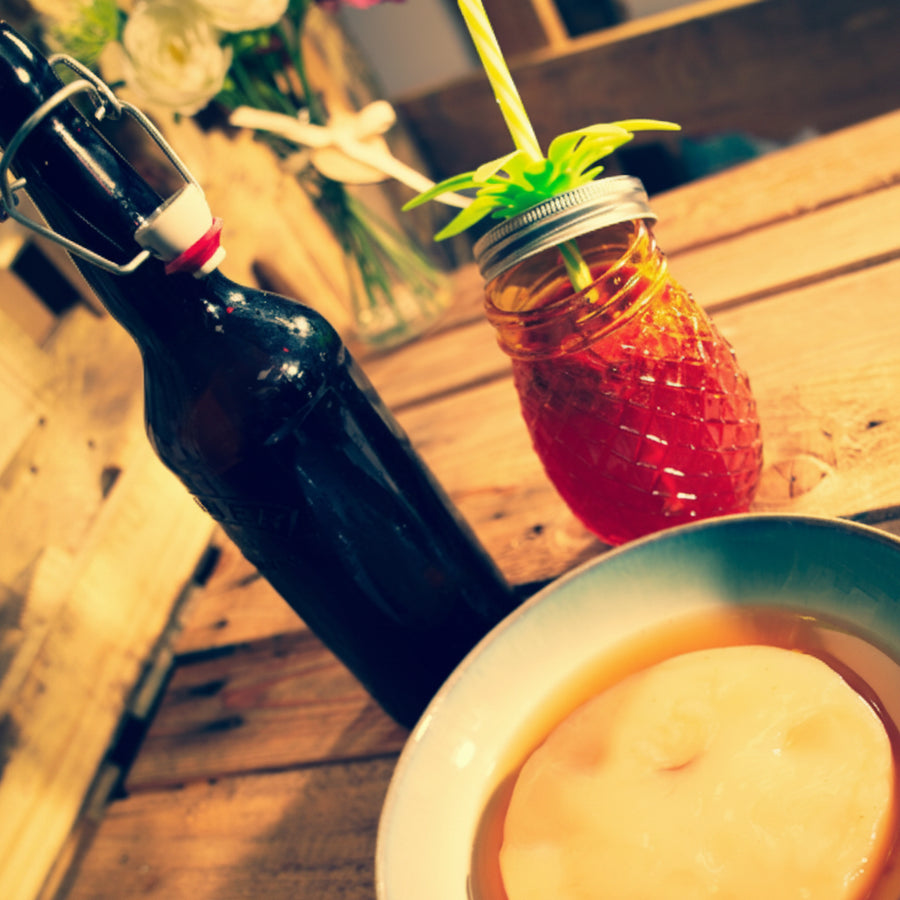
Viennese and Tibetan kombucha cultures are brewed exactly the same way. The only difference is the tea: Viennese is always brewed with Darjeeling tea, and Tibetan with Pu-erh tea. Read these instructions through before you start, and get in touch if you're unsure about anything.
What are heirloom SCOBYs?
An heirloom SCOBY is a kombucha culture that has been brewed with just one type of tea for generations. Over time, that single tea shapes the mix of yeasts and bacteria in the culture, giving it a character all of its own, which it passes on to every baby it grows.
Viennese
Thought to come from the coffee houses of Vienna, where it was brewed only with Darjeeling tea. It makes a lighter, more delicate, fruity kombucha with Darjeeling's muscatel notes. It can be a little slower to brew than a standard SCOBY, so be patient.
Tibetan
Believed to have been brewed by Tibetan monks with Pu-erh tea for generations. Pu-erh is itself a fermented tea, which is thought to have changed the culture over time. It makes a darker, earthier, more complex kombucha.
| Standard SCOBY | Heirloom SCOBY | |
|---|---|---|
| Tea | Any real tea: black, green or white, and you can mix them | One tea only, every time: Darjeeling for Viennese, Pu-erh for Tibetan |
| Flavour | Classic fruity, tangy kombucha that changes with the tea you use | Its own distinct flavour, shaped by generations of the same tea |
| Babies | Brew however you like | Stay true heirlooms as long as you stick to the same tea |
| Brewing | Exactly the same method, and both work for batch or continuous brewing | |
Want to experiment with other teas? Use one of your spare baby SCOBYs, and keep the mother on its own tea so your heirloom stays pure.
At a glance
| Stage | Water | Tea | Sugar | Also add |
|---|---|---|---|---|
| Your first brew | 1 litre | 3–4 bags (or 6–8g loose) | 80–100g | Your culture and the liquid it came in |
| Every batch after | 1 litre | 3–4 bags (or 6–8g loose) | 80–100g | At least 125ml (about a quarter of the jar) of your last brew, plus the culture |
| Bigger batch | 2 litres | 6–8 bags (or 12–16g loose) | 160–200g | Only once your culture has grown (see baby SCOBYs) |
| Using a heat tray | Any amount | Same as above | Same as above | It brews much faster, so roughly halve the brewing time |
Never use less than 80g sugar per litre, as it can cause problems in the brew. Use a glass jar that holds about 1.5 litres for a 1 litre brew, and keep it at a steady 20–23°C.
Before you begin
Never pour boiling water into glass
It can crack. Make your tea in a heatproof container such as a pan or jug.
Cool it right down
Let the sweet tea cool until it's barely warm, nearer cold than hot (but not icy), before your culture goes in.
No metal near your culture*
Take off rings and jewellery. A metal kettle or pan is fine for making the tea. Just keep metal away from the culture.
*Stainless steel is generally considered safe, as it doesn't react with the acidity of the brew. Just make sure it really is stainless steel, and check it regularly for rust.
Not brewing straight away? Keep your culture somewhere cool and out of direct sunlight, but never in the fridge. If it arrives in cold weather, leave it at room temperature for 48 hours first.
Wash and rinse all your equipment well. It doesn't need sterilising.
What you'll need
- Your Viennese or Tibetan culture and the liquid it came in
- 3–4 tea bags (or 6–8g loose leaf): Darjeeling for Viennese, Pu-erh for Tibetan. Organic is nice but not essential. Never use flavoured or scented tea.
- 80–100g granulated sugar. Never use less than 80g. Never use sweeteners: find out why it has to be real sugar.
- 1 litre of water, boiled
- A glass jar that holds about 1.5 litres
- A tightly woven cotton or muslin cloth and an elastic band
- Bottles for your finished kombucha
Your first brew, step by step
-
Make the sweet tea
Boil a kettle. Put the tea bags (or loose tea) and the sugar into a heatproof container, not glass. Pour over 1 litre of boiling water and stir until the sugar dissolves.
-
Brew, then cool
Let the tea brew for a few minutes, then take out the tea bags. Let it cool until it's barely warm, nearer cold than hot but not icy, then pour it into your glass jar.
-
Add your culture
Add the liquid from your culture's bag, then place the culture on top, lightest side up if you can. It may float, sink or sit in the middle. All fine!
-
Cover it
Cover the jar with the cloth and secure it with the elastic band. If a little tea spills over when the culture goes in, that's fine.
-
Leave it somewhere warm and steady
Keep it out of direct sunlight at a steady 20–23°C. A warm room or airing cupboard is ideal. Light or dark doesn't matter. Keep it off the floor and away from busy areas where people walk past all the time.
How to tell when it's ready
- Your kombucha usually takes 5 to 18 days. On a heat tray it brews much faster, so roughly halve the time.
- From about day 3, pour a little into a glass and taste it. Try again each day.
- It's ready when it tastes fruity, sour and tart rather than like tea, a bit like apple cider vinegar, and smells vinegary and slightly yeasty.
- Keep going until it reaches a flavour you like. If it still tastes sweet or like tea, give it another day.
- The longer you leave it, the less sweet and more sour it gets. The liquid will also change colour a little and turn slightly cloudier.
- With practice, you'll find the brewing time that suits your taste.
Harvesting and your next batch
-
Pour off your kombucha
Pour it into the container you'll keep it in. Filtering through a plastic sieve, muslin or coffee filter is optional, and a little sediment is normal.
-
Keep some back
Leave the culture in the jar with at least 125ml (about a quarter of the jar) of the brew, as starter for next time.
-
Chill and enjoy
Chill your kombucha in the fridge for a few hours. The longer it chills, the fizzier it gets.
-
Start the next batch
Start your next batch straight away to keep a constant supply going.
Not ready to brew again yet? Cover the jar with the cloth and keep the culture in its liquid at room temperature for up to 5 days. Check it often and never let it dry out.
Baby SCOBYs
A new culture will start to form as a thin white layer on top of the brew, or on top of your culture if it floats.
- When your kombucha is ready, gently lift the baby off and keep it with the mother. If they've fused together, just leave them joined.
- Put the baby back into each new batch until it's about 1–2cm (half to three-quarters of an inch) thick. Then it can brew on its own.
- Use it to replace the mother, or start a second jar for even more kombucha.
Grow slowly. Start small with a young culture and build up the volume as it grows. Too much brew for too small a culture risks mould.
Bottling, fizz and storage
Kombucha is naturally sparkling, so fizz builds up in sealed bottles, especially at room temperature and in warm weather.
- Burp sealed bottles regularly, ideally every day, or store your kombucha in a container that isn't airtight.
- To burp a swing-top bottle, hold the stopper down and release the lever slowly until you hear a "pssst", then close it again. Repeat until it calms down.
- In warm weather, chill bottles well before opening and keep them away from the oven or a radiator. Open them slowly, over a sink.
Kombucha keeps for up to 2 years in the fridge or at room temperature. Once opened, drink it within 10 days. Over time it slowly turns into kombucha vinegar, which is great in salad dressings, as a hair rinse, as a marinade or as a natural cleaner.
Introducing kombucha to your diet: in week 1, have a tumbler-sized glass a day, ideally before breakfast. In week 2, a tumbler-sized glass before each meal. After that, drink as much as you like. It's best fresh from the fridge! If you're diabetic or taking medication, check with your doctor first.
Want more fizz? See our guide to getting fizz: the best bottles, how much sugar to add, why it might be flat, and how to stop it gushing.
Troubleshooting
Every culture is a little different. With any live culture there are lots of variables, like temperature, and everyone likes their kombucha a little different.
Normal
- Fuzz, strings or bits: yeast chains, harmless. They may cling to your culture.
- A little sediment at the bottom of the jar.
- Your culture floats, sinks or sits sideways. It doesn't affect the brew.
- A mother and baby fused together. Just leave them joined.
Taste and timing
- Too sweet: leave it a little longer and taste again each day.
- Too sour or vinegary: bottle it a little sooner next time.
- Slow brewing: keep it at a steady 20–23°C. In a cold home, a heat tray helps.
Is it mould?
Mould is more likely when it's too cold, when less than 80g sugar per litre is used, or with too much brew for too small a culture. Mould is dry, fuzzy and raised, and sits on the top surface where the culture meets the air. Anything wet, stringy or under the culture is normally yeast.
Think it's mould? First compare it with the photos in our mould or yeast photo guide, or try our Culture Clinic.
Bought the culture from us recently and want a replacement? Don't throw it away. Cover the brew, don't drink it, and send us a photo so we can see it and help. We can't replace cultures that have already been thrown away.
Otherwise, if it's mould, throw away the brew and the culture, wash everything in hot soapy water and start again.
Still stuck?
Every culture behaves a little differently. Send us a message, with a photo if you can, and we'll take a look. Or book a one-to-one session and we'll help you set up your brew.
Get in touch Book brewing advice Culture ClinicReady for more?
Starting again, brewing a bigger batch, or after a fresh culture for a friend? Everything you need is in the shop.
Shop Viennese SCOBYShop Tibetan SCOBYAll brewing guides