
Happy Kombucha bottling guide
Bottling Safely: Cleaning and Checking Your Bottles
Naturally fizzy drinks like kombucha, Jun, water kefir and ginger beer build up real pressure in the bottle. Good bottles that are clean, in good condition and burped regularly are what keep that fizz safe. A quick check every time you bottle takes seconds and is well worth it.
Choosing the right bottles
PET plastic bottles
Strong, light and they flex, so you can feel the pressure building. Squeeze one: when it's firm, it's fizzy. Ideal for ginger beer and anyone new to bottling.
Proper fermenting bottles
Thick glass swing-top or screw-lid bottles made to hold pressure. Look for bottles sold for brewing or fermenting.
Never use these
Decorative bottles, thin glass made for still drinks, old wine or spirit bottles, or jam jars. They aren't made for pressure and can burst.
Cleaning your bottles
-
Rinse straight away
Rinse each bottle as soon as it's empty, before the sediment has a chance to dry on.
-
Wash with hot soapy water
Wash with hot soapy water, or use vinegar. A bottle brush gets into the neck and the bottom where sediment collects.
-
Rinse well
Rinse several times so no soap is left, as soap residue can harm your culture.
-
Dry and store
Leave bottles upside down to drain, on a rack or a bottle drainer, and store them with the lids off so they dry fully.
Never use bleach on bottles, jars or anything that touches your culture. Your bottles don't need sterilising. Clean and well rinsed is all they need.
Checking your bottles
Every time you bottle, give each one a quick look. If in doubt, don't use it.
Glass bottles
- Chips or cracks, especially around the neck, rim and base. Don't use a damaged bottle.
- Scratches or scuffs on the glass. Deep scratches weaken it.
- Rubber seals on swing tops: inspect them every few months, and replace them if they look perished, cracked, flattened or hard.
- Wire clips: make sure they're not rusty, bent or loose, and that the stopper closes firmly.
PET plastic bottles
- Splits or cracks anywhere on the bottle.
- Dents, stretching or a bulged base that won't spring back into shape.
- Caps: check they still screw on tightly and seal. A worn thread lets the fizz escape.
- When to replace: PET bottles are usually fine to reuse until they no longer seal or they split.
Worn swing tops or caps? You can replace just the lids: swing tops or screw caps for PET and fermenting bottles.
Burping your bottles
Burping means letting out some of the gas so the pressure doesn't build up too far.

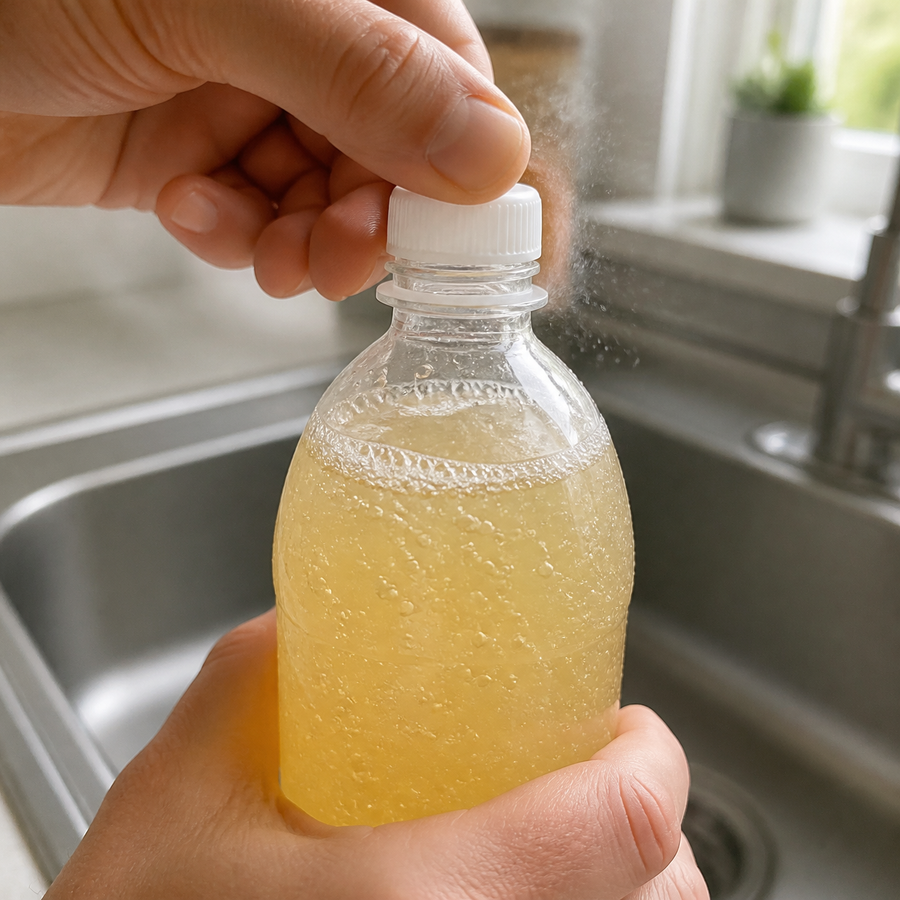
This is what happens when you forget to burp. A little "pssst" every day saves you a face full of kombucha.
- Burp sealed bottles once a day while they're at room temperature, more often in warm weather.
- Open the lid slowly until you hear a "pssst", then close it firmly again. For swing tops, hold the stopper down and release the lever gently.
- Once your drink is as fizzy as you like, move it to the fridge. The cold slows everything down.
- Chill bottles well before opening, and open them slowly, over a sink, pointing away from you and others.
- Keep bottles away from the oven, radiators and direct sunlight.

Open the infographic full size to save or print it.
If a bottle feels rock hard, is bulging or is leaking, put it in the fridge for a few hours before opening it slowly over a sink. Then check it for damage before using it again.
Brewing guides
Find bottling and second fermentation tips for each drink in our brewing guides: kombucha, Jun, water kefir and ginger bug.
Still stuck?
Every culture behaves a little differently. Send us a message, with a photo if you can, and we'll take a look. Or book a one-to-one session and we'll help you set up your brew.
Get in touch Book brewing advice Culture ClinicReady for more?
Starting again, brewing a bigger batch, or after a fresh culture for a friend? Everything you need is in the shop.
Shop bottlesBottle brushAll brewing guides